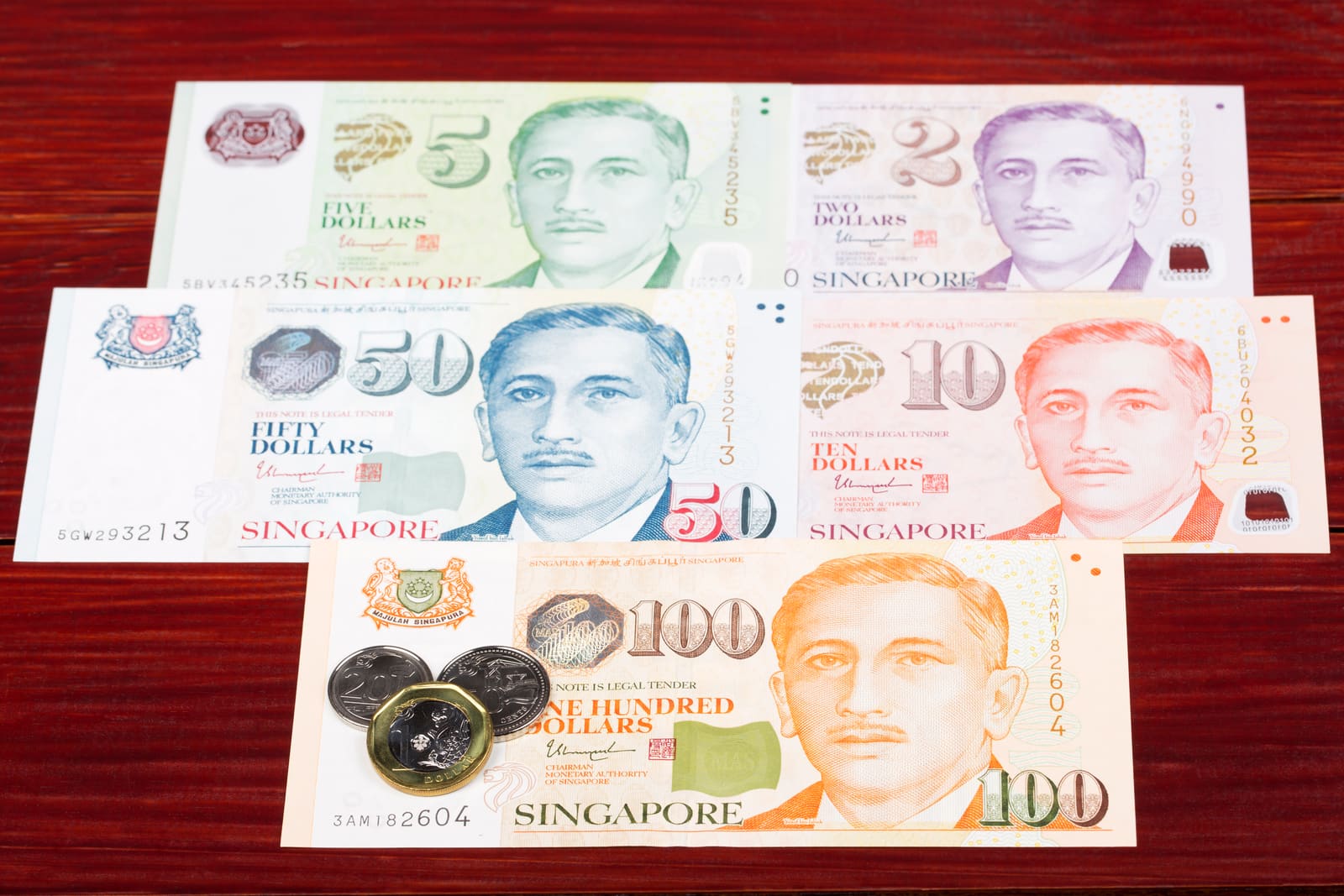
Putting money into a small child’s CPF Special Account looks like easy parenting maths. For the July-to-September 2026 quarter it earns 4% a year, with an extra 1% on the first S$60,000 of combined CPF balances for a member below 55. A dollar placed there at one has more time to compound than one placed there at 21.
But the rate is not the decision. A CPF top-up converts money the family can still use into an irrevocable retirement gift. The useful question is whether this dollar is accessible family money, retirement money already, or capital that can stay invested through market risk.
The Ministry of Manpower reported that, as of 31 December 2023, 3,400 children under five had Special Account balances, with a median of about S$1,000. The figures show that this is a real choice, not only a thought experiment about large balances.
The rate is not 5% on the whole balance
CPF Board’s extra-interest rule is easy to misread. It is an extra 1% on the first S$60,000 of a member’s combined CPF balances, not a flat 5% on every dollar in the Special Account. A Singapore-citizen child already holds MediSave from the MediSave Grant for Newborns — S$4,000 for births from 1 January 2015 to 31 March 2025 and S$5,000 from 1 April 2025 — and that balance uses part of the first S$60,000.
On an illustrative S$100,000 Special Account balance with no other CPF savings, no further deposits and today’s rates held constant, the difference is material:
| Held for | Correct: tiered | Wrong: flat 5% | Overstated by |
|---|---|---|---|
| 1 year | S$104,600 | S$105,000 | S$400 |
| 5 years | S$124,915 | S$127,628 | S$2,713 |
| 10 years | S$155,228 | S$162,889 | S$7,661 |
Our calculation. For each year: 5% on the first S$60,000 and 4% on the remainder; balances rounded to the nearest dollar for display. CPF computes interest monthly and credits it annually. The current 4% floor is extended only to 31 December 2026, and rates are reviewed quarterly.
In plain English: early compounding adds years, but it does not turn every Special Account dollar into a perpetual 5% dollar. A large balance needs two rates in the calculation.
What an early top-up buys — and what it spends
The Retirement Sum Topping-Up Scheme is the route for a cash top-up to a child’s Special Account. It earns interest under the current CPF rules and changes what that dollar can be used for.
1. Once the money goes in, it is out of reach until the child turns 55, and then only as retirement savings
CPF Board says top-ups are irreversible and cannot be withdrawn for any other purpose. At 55, the top-up and its interest move into the Retirement Account, up to the Full Retirement Sum; payouts can start from 65 under today’s rules. For a child born in 2025, that means 2080 and 2090 at the earliest. The money cannot instead pay for school fees, a move, a medical gap or a change in plans.
2. A top-up to a child does not reduce the parent’s tax bill
CPF Board gives no tax relief for a top-up to a child’s CPF accounts. A parent may separately qualify for relief on a top-up to their own account; how that compares with an SRS contribution is a separate question. The tax result depends on whose account receives the money.
3. It may leave the adult child with less room for a CPF top-up later
For a member below 55, the maximum cash top-up is the current Full Retirement Sum less Special Account savings and Special Account amounts withdrawn for investment. The Full Retirement Sum is S$220,400 for 2026. IRAS permits up to S$8,000 of CPF Cash Top-up Relief each year for eligible top-ups to one’s own account. An adult child with taxable income may value that capacity later; they may also never come close enough to the cap for it to matter. The cost is a future option, not a tax bill today.
In plain English: money put in now takes up room the adult child might have wanted for a tax-relieved top-up of their own, but only if they come close to the cap in a year when the relief would matter.
The missing third path: invest outside CPF
Leaving the money outside CPF can mean accessible cash or a long-term equity investment. Equities can offer a higher return, but the value can fall when the money is needed. An investment held in a parent’s account also has different ownership and control from a CPF top-up to the child.
That makes “CPF at 5% versus equities at 8%” an incomplete comparison: one is a current, tiered CPF rule; the other is a volatile scenario whose outcome depends on market, currency, fees, tax and time. The tool below labels the 4% and 8% paths as scenarios, not forecasts.
There is a nearer comparison too. If the parent is below 55, the same dollar in the parent’s Special Account earns the same 4% floor, may qualify for CPF Cash Top-up Relief, and is locked for decades fewer. A child with less than S$60,000 of combined CPF balances may still receive the extra 1%, even where the parent has already passed that threshold. The table prices that difference on S$10,000, with today’s tiers held constant.
| Held for | With the extra 1% (5% on the first S$60,000, then 4%) | At 4% throughout | What the extra 1% adds |
|---|---|---|---|
| 10 years | S$16,289 | S$14,802 | S$1,487 |
| 30 years | S$43,219 | S$32,434 | S$10,785 |
| 50 years | S$111,236 | S$71,067 | S$40,169 |
Our calculation, same recurrence as the first table, starting from S$10,000 with no other CPF savings; balances rounded to the nearest dollar.
Earlier means more compounding — and less flexibility
An earlier top-up gives the money more time under CPF’s rules, but makes the irreversible decision when the family knows least about what the child will need before retirement. A later top-up has fewer years to compound, but leaves cash under family control for longer and postpones any reduction in the child’s own top-up room. Family liquidity, housing plans, education commitments and the child’s eventual earnings can all change before retirement.
Four checks before the rate does the talking
First: what is this dollar for? Retirement money has a different job from money that might be needed before the child starts work.
Second: has the Child Development Account reached its co-matching cap? A matched CDA dollar stays usable for approved child expenses and is worth more than a year of interest. As at 23 August 2026, the caps are S$4,000 for a first child, S$7,000 for a second, S$9,000 for a third or fourth and S$15,000 for a fifth or later. Children born from 1 April 2027 receive a uniform S$5,000 co-matching cap and a CDA to the end of the year they turn 16; existing caps remain until 30 September 2027 before moving to S$5,000.
Third: what can happen outside CPF? Cash remains available; an equity investment can fall; and a parent’s own CPF has different access, tax and ownership consequences.
Fourth: what room is left today? Check the child’s current Special Account savings against the current Full Retirement Sum. It is a moving gap, not a permanent number copied from an old article.
The real question: accessible money, retirement money or long-term risk capital?
A child’s Special Account top-up is an irrevocable retirement gift, not a child-savings account with a better headline rate. The 5% applies only to the first S$60,000 of combined CPF balances under current rules; the rest earns 4%.
Start by classifying the dollar: accessible family money, retirement money already, or capital that can remain invested through an uncertain market path. That is more useful than asking whether 5% or 8% is higher. The decision map shows the same amount as cash, CPF and labelled equity scenarios, at 55 and when the family might need it.
Run the same amount through the three paths
What does the same amount become?
Enter the child’s age and the amount. The map compares the same amount as accessible cash, a CPF top-up and an equity scenario at age 55 and when the family might need it.
Balances across all CPF accounts set the S$60,000 extra-interest tier; only Special Account savings count against today’s top-up room. Enter the published cash rate that applies to the accessible option you are considering.
Keep it as cash
- At age 55 (about )
- — At the cash rate entered, before tax.
- Same, in today’s dollars at 2% inflation
- — Inflation is an assumption, not a return.
- Reachable in years
- — Available at any time.
Put it into CPF now
- At age 55 (about )
- — Value from this top-up at today’s 5%/4% tiers, after the all-account balances entered.
- Same, in today’s dollars at 2% inflation
- — Same assumption as the other columns.
- Reachable in years
- S$0 —
Invest in equities
- At age 55 (about )
- — Two constant-return paths, 4% and 8% a year. Neither is a floor or a forecast; a loss over the period is possible.
- Same, in today’s dollars at 2% inflation
- — Same assumption as the other columns.
- Reachable in years
- — Available at any time at market value, which may be below the amount invested.
The part that cannot be priced here: whether the family can accept a lower equity value when money is needed, and whether the equity account belongs to a parent or the child. Those are ownership and risk decisions, not rate inputs.
Assumes no CPF balances beyond those entered, no CPF Investment Scheme holdings and no later deposits. Interest is applied annually at today’s tiers; CPF credits it monthly and rates are reviewed quarterly. Equity figures are constant total-return scenarios before fees, tax and currency. Inflation at 2% is an assumption. This is not a CPF-rate forecast or a personal recommendation.
Sources and current-rule notes
Rates are as at the July-to-September 2026 quarter; the Full Retirement Sum is as at 1 January 2026; Child Development Account caps are as at 23 August 2026. Every rule is re-checked against the pages below before publication.
- CPF Board: How to top up your child’s CPF accounts — child top-ups, the Special Account rate, extra interest and no tax relief for the giver.
- CPF Board: Earning attractive interest — current rates, the 4% floor extension and the quarterly review.
- CPF Board: How much is my Full Retirement Sum? — current and historical Full Retirement Sums.
- CPF Board: What is the maximum amount of top-ups I can receive? — the top-up limit formula for members below 55.
- CPF Board: Top up to enjoy higher retirement payouts — top-ups are irreversible and reserved for monthly payouts.
- CPF Board: What happens to Special Account top-ups at 55? — transfer to the Retirement Account up to the Full Retirement Sum; the Special Account closes.
- CPF Board: Reaching age 55 and Reaching age 65 — what moves to the Retirement Account, and payouts starting between 65 and 70.
- CPF Board: Closure of Special Account for members aged 55 and above — the 19 January 2025 closure.
- IRAS: CPF Cash Top-up Relief — relief conditions, the annual cap and the Full Retirement Sum condition.
- Ministry of Manpower: written answer on top-ups to children’s CPF Special Account — the 3,400 and S$1,000 figures.
- Made For Families: MediSave Grant for Newborns — grant amounts by birth date.
- Made For Families: Baby Bonus Scheme — Child Development Account co-matching caps and use.
- Population.gov.sg: Marriage and parenthood measures at National Day Rally 2026 — the SG Child Support Package and the Child Development Account transition dates.
- MoneySense: guide to shares — higher potential returns, price fluctuation and loss risk.
- MoneySense: managing investment risk — risk, diversification, liquidity and investment horizon.