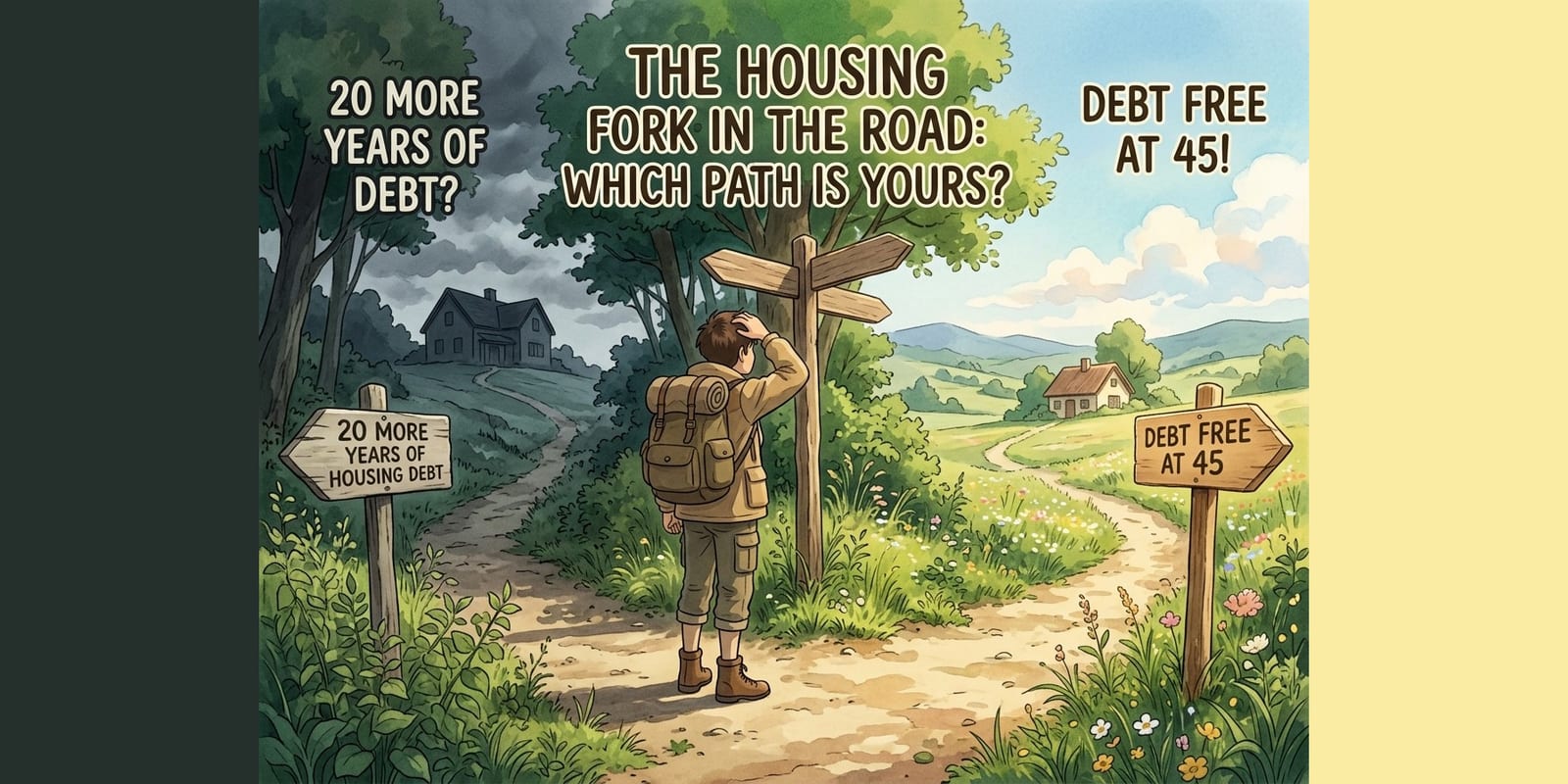
I am preparing to sell my home, and a rather inconvenient possibility has appeared.
Depending on the final numbers, I could buy an HDB flat and live without a mortgage.
No monthly housing instalment. No housing loan following me into the next stage of life. One enormous expense removed from the amount I need to earn every month.
You would think my response would be immediate.
“Excellent. Where do I sign?”
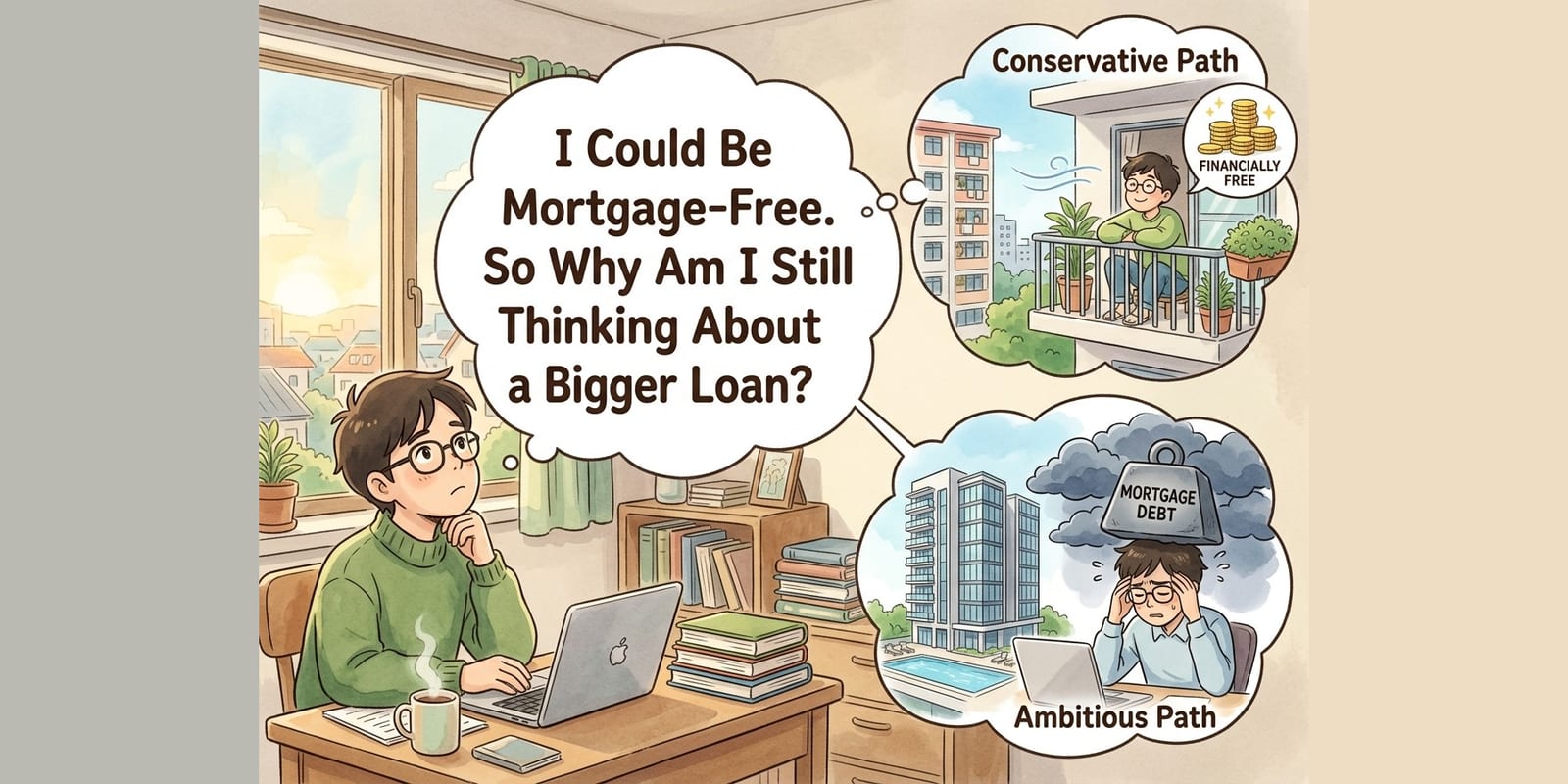
Instead, part of my brain has started asking whether I should buy another private property while the banks are still willing to lend me a meaningful amount of money.
Apparently, when presented with an exit from the treadmill, my first instinct is to check whether a newer treadmill is available.
Disclosure
RE's personal reflections, not financial or property advice. A mortgage-free purchase depends on individual circumstances, including net sale proceeds, CPF requirements, housing eligibility and total purchase costs.
Someone Else Has Already Stepped Off
A recent Stacked article about a homeowner who sold her S$2.48 million condo and bought a S$930,000 HDB flat caught my attention.
After eight moves in twenty years, Lynda was looking for somewhere to stay—not merely somewhere from which to make her next move.
The practical details of daily life mattered: transport, food, healthcare, the neighbourhood and whether the home would continue to work as she grew older. She also realised that she had hardly used the facilities that came with condo living.
The headline numbers are naturally eye-catching. But the difference between two property prices is not automatically cash in the bank. Outstanding loans, CPF refunds, transaction costs and renovations all affect the final outcome.
What stayed with me was not the arithmetic.
It was the change in the question.
Not:
“What is the most expensive property I can afford next?”
But:
“What home would actually suit the life I want?”
Those questions can lead to very different addresses.
I Have Written About This Before. That Was Easier.
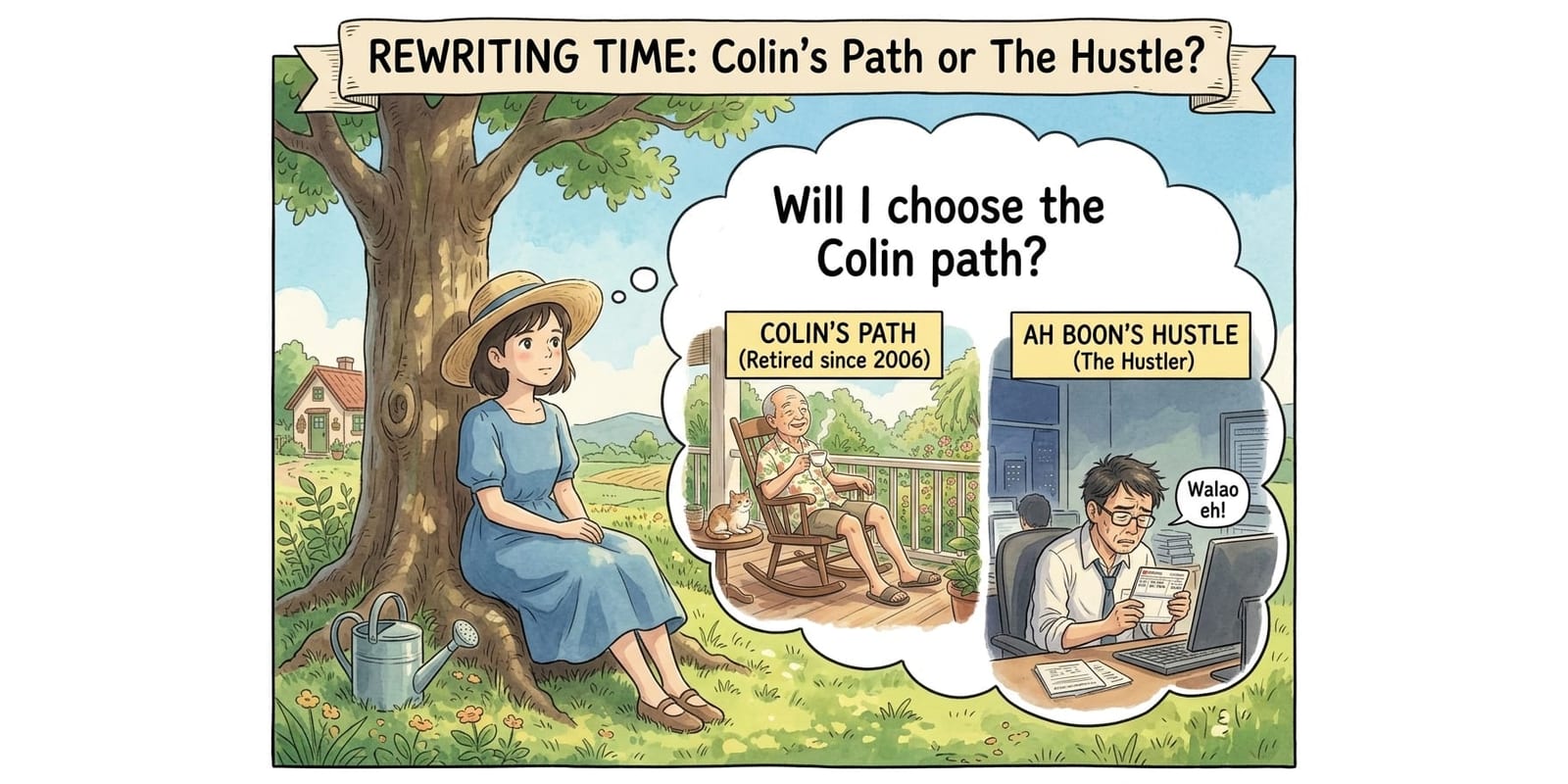
In Redefining Your Enough Point, I wrote about Colin Lau, who stepped away from conventional employment at 35 and built a much simpler life around modest needs.
I did not think everyone should copy him. Our families, responsibilities and circumstances differ. His path is certainly not a template that can be downloaded and installed into today’s property market.
But his story challenged a deeply embedded assumption: that earning more, borrowing more and accumulating more must remain the plan indefinitely.
I admired his clarity.
Writing about someone else possessing that clarity was also considerably easier than having to find some of my own.
Now the question has climbed out of the article and landed inside my housing decision.
Very inconsiderate of it.
This Is Not Just My Enough Point
I also have two children, so this is not simply a question of how cheaply I could live on my own.
Whichever home I choose has to work for the three of us. Space matters. Location matters. Everyday routines matter. Most importantly, it should be somewhere my children feel comfortable and regard as their home too.
That makes the decision more complicated—but perhaps also clearer.
Providing a good home for my children does not necessarily mean buying the most expensive property I can manage.
There is value in space and comfort. There is also value in financial breathing room, greater stability and having a father whose attention is not permanently occupied by the next instalment.
Of course, a smaller mortgage does not automatically make anyone a more present parent. Nor does living in a condo make someone less present.
But it forces me to ask an uncomfortable question:
Am I stretching because the next property would genuinely improve our lives—or because I have learned to recognise a more expensive property as progress?
I want to give my children a good home.
I am trying to remember that “good” describes the life inside it, not just the property listing.
The Case for Continuing to Stretch
I understand the attraction of buying another private property.
It might provide a home that I prefer. It could offer potential capital appreciation and allow me to continue building wealth through property. Depending on the choice, it may also give the children more space or access to a location that works better for the family.
Borrowing capacity changes with age, income and circumstances. Once that capacity disappears, it may not return.
That creates a powerful temptation to use it while it is still available.
FI and I may approach this question differently. I can understand the argument for continuing to stretch rather than stepping back too early. If the repayments remain comfortable, the risks are understood and the property fits a genuine long-term plan, a larger mortgage can be a perfectly deliberate decision.
But I need to distinguish between two very different motivations:
Am I borrowing because I have found the right home and investment—or because I am uncomfortable leaving borrowing capacity unused?
A bank telling me that I can take a loan is useful information.
It is not a personal instruction.
Credit limits have a strange psychological effect. They make unused debt feel like a wasted opportunity.
It isn’t.
What Would Being Mortgage-Free Actually Buy Me?
The obvious answer is lower monthly expenses.
The more interesting answer is flexibility.
A mortgage-free home could reduce the amount I must earn every month simply to keep life in place. It could give me more room to choose work for its opportunity rather than only for the next repayment.
It might give me more patience with a business that needs time to grow, more freedom to explore a different career and more ability to be present with my children without mentally calculating the cost of slowing down.
It would not make life free.
There would still be family commitments, food, healthcare, education, maintenance and the occasional expense that arrives with all the confidence of an invited guest.
Nor would owning a fully paid home automatically mean I could retire. I would still need to examine my savings, liquidity, future expenses and the other numbers required to keep life running.
But removing the mortgage could significantly lower the income needed to sustain that life. I later worked through what that reduction looks like in actual dollars in Thomas Ong’s Smaller Flat and My Own Mortgage Question — the mortgage alone can outweigh every other monthly commitment combined.
That is a different kind of return.
It does not appear as a rising property valuation.
It appears as fewer things that must go right every month.
The Fear Is Not Just Losing Money
One possible regret is easy to identify.
What if I buy the HDB, private property prices continue rising, and I spend the next ten years calculating what I could have made?
Singapore provides excellent facilities for this activity. Someone will always know someone whose property appreciated more than yours.
There will always be a new launch that sold out over the weekend, a neighbour who bought at precisely the right time and an acquaintance who made a life-changing profit without apparently doing anything except selecting the correct show-flat unit.
But there is another possible regret.
What if I take on the larger commitment, spend years servicing it and eventually realise that I already had enough to live comfortably?
One regret is about upside I might miss.
The other is about freedom I might postpone.
Neither can be settled by confidently predicting the property market over dinner.
Maybe “Upgrading” Needs a Better Definition
We normally recognise a housing upgrade by looking at the property.
A bigger unit. A private address. Better facilities. A newer development.
But could an upgrade also mean having no housing instalment?
Could it mean needing less income every month?
Could it mean having the freedom to take a risk professionally, spend more time with the children or simply stop treating every quiet month as a financial emergency?
I am not trying to turn buying less into a virtue.
An HDB flat is not automatically the wiser choice, and a private property is not automatically a monument to ego. A person can be financially stretched in either one. A home’s price also tells us very little about the quality of the family life taking place inside it.
The real question is whether the home supports the life—or whether the entire life must be organised around supporting the home.
Before Philosophy, There Is Still a Spreadsheet
Before declaring that I have found my enough point, I need to work through the actual numbers.
The net sale proceeds matter. So do CPF requirements, housing eligibility, purchase costs, renovation expenses, remaining liquidity and the ongoing costs of whichever property I choose.
“Mortgage-free” sounds wonderfully clean in an article.
Real transactions tend to arrive with more columns.
Only after the numbers are clear can I confront the question that the spreadsheet cannot answer:
How much more do I really want—and what am I willing to continue doing for it?
Perhaps that is the real purpose of an enough point.
It is not a command to stop earning, investing or aspiring.
It is the point at which continuing becomes a choice rather than an automatic response.
What Would You Do?
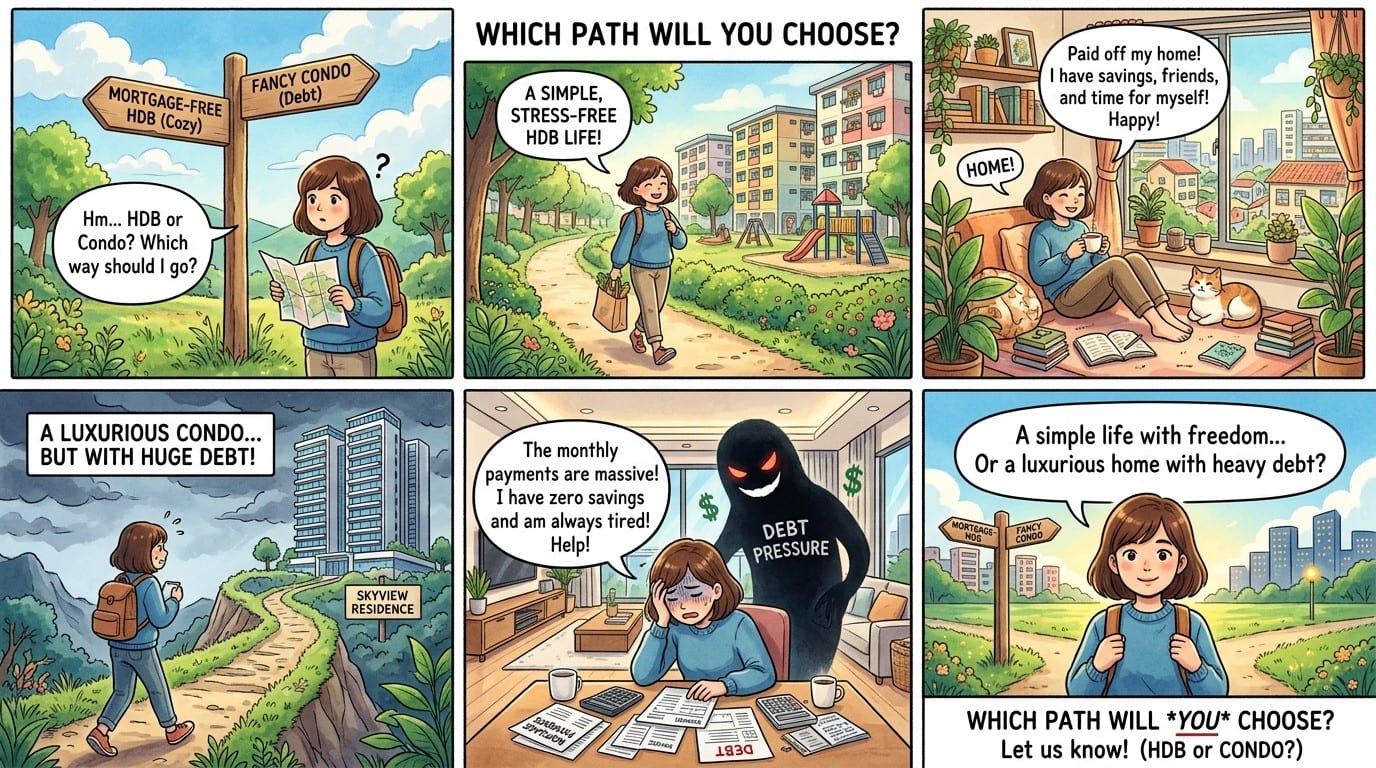
If selling your home gave you a realistic opportunity to buy an HDB flat without a mortgage, would you take it?
Would you choose the security and flexibility of being mortgage-free?
Or would you continue with private property while your income, age and borrowing capacity still allowed you to do so?
I would genuinely like to hear from people who have taken either path.
What did your decision give you?
And what did it cost you beyond money?
I have not decided yet.
But I am beginning to think my enough point may not be the most expensive home the bank says I can afford.
It may be the home that allows me—and my children—to afford more of our lives.